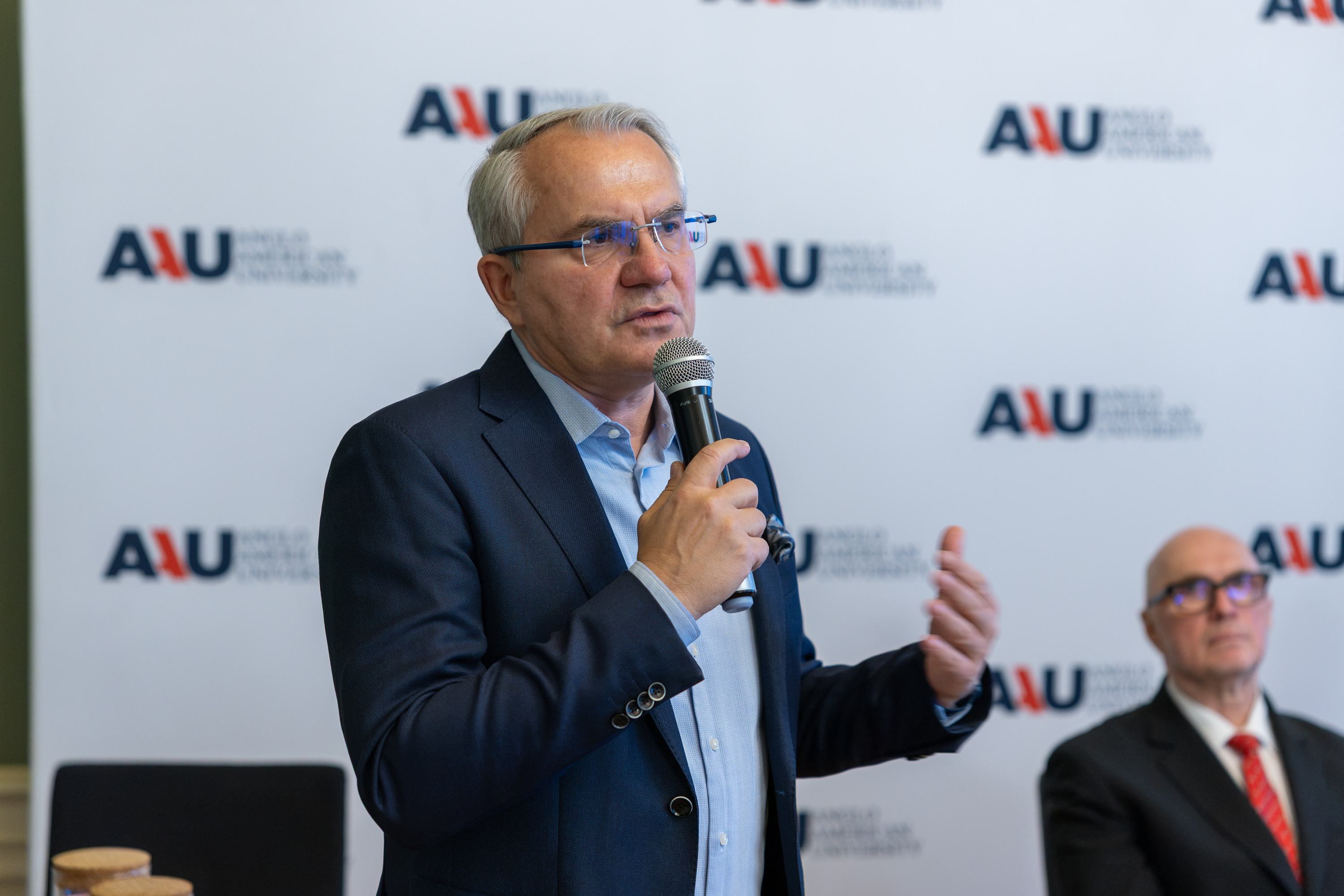
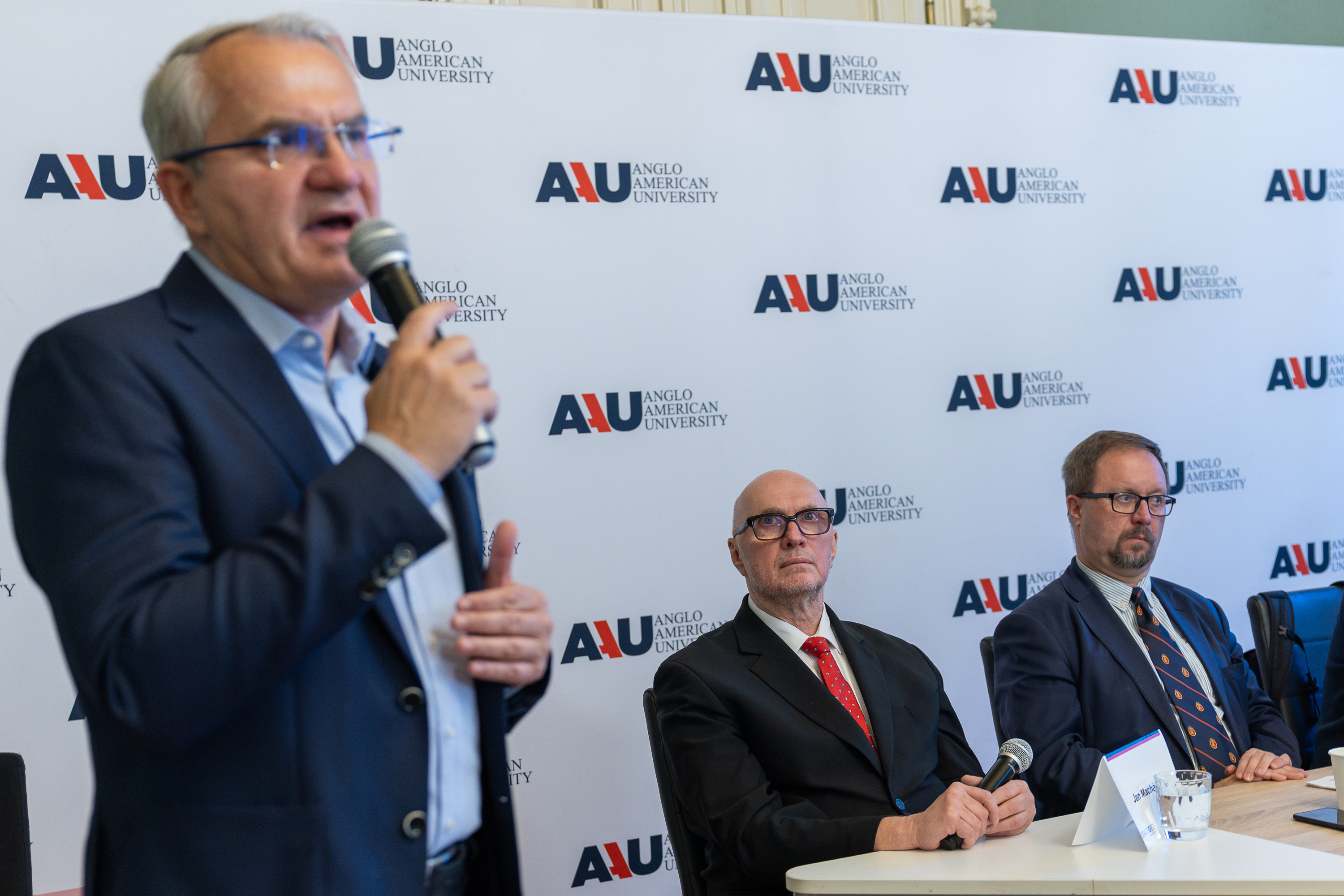
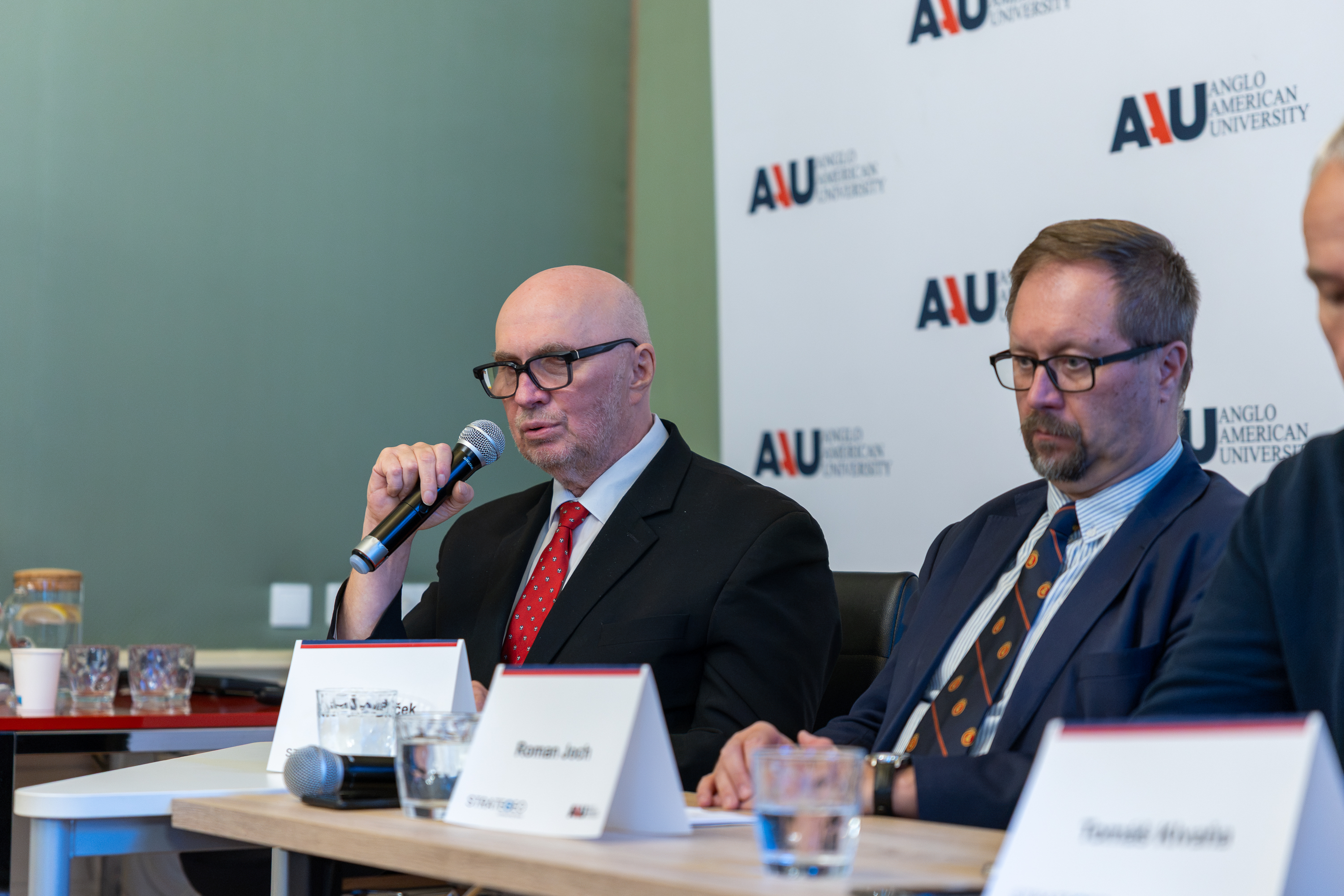
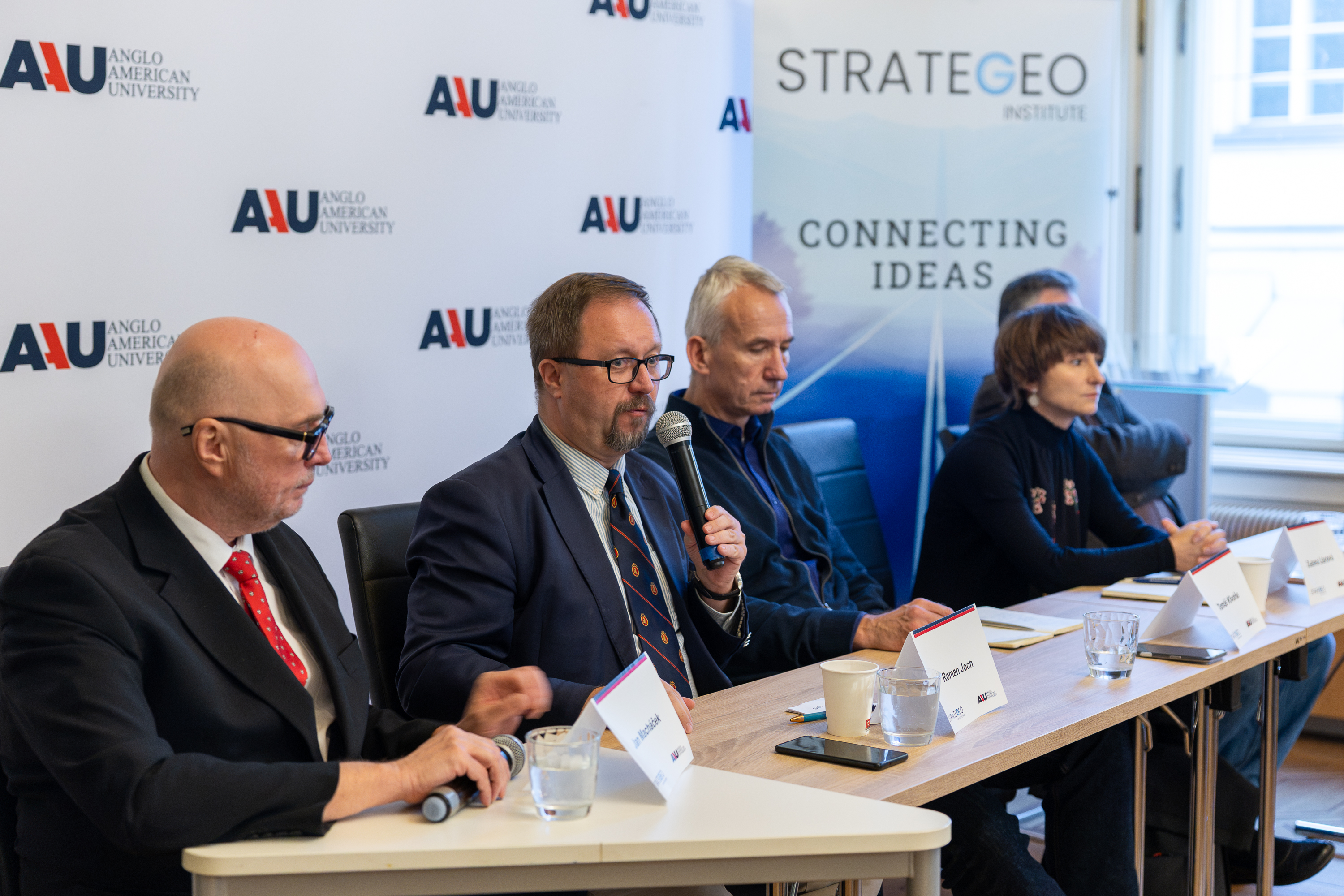
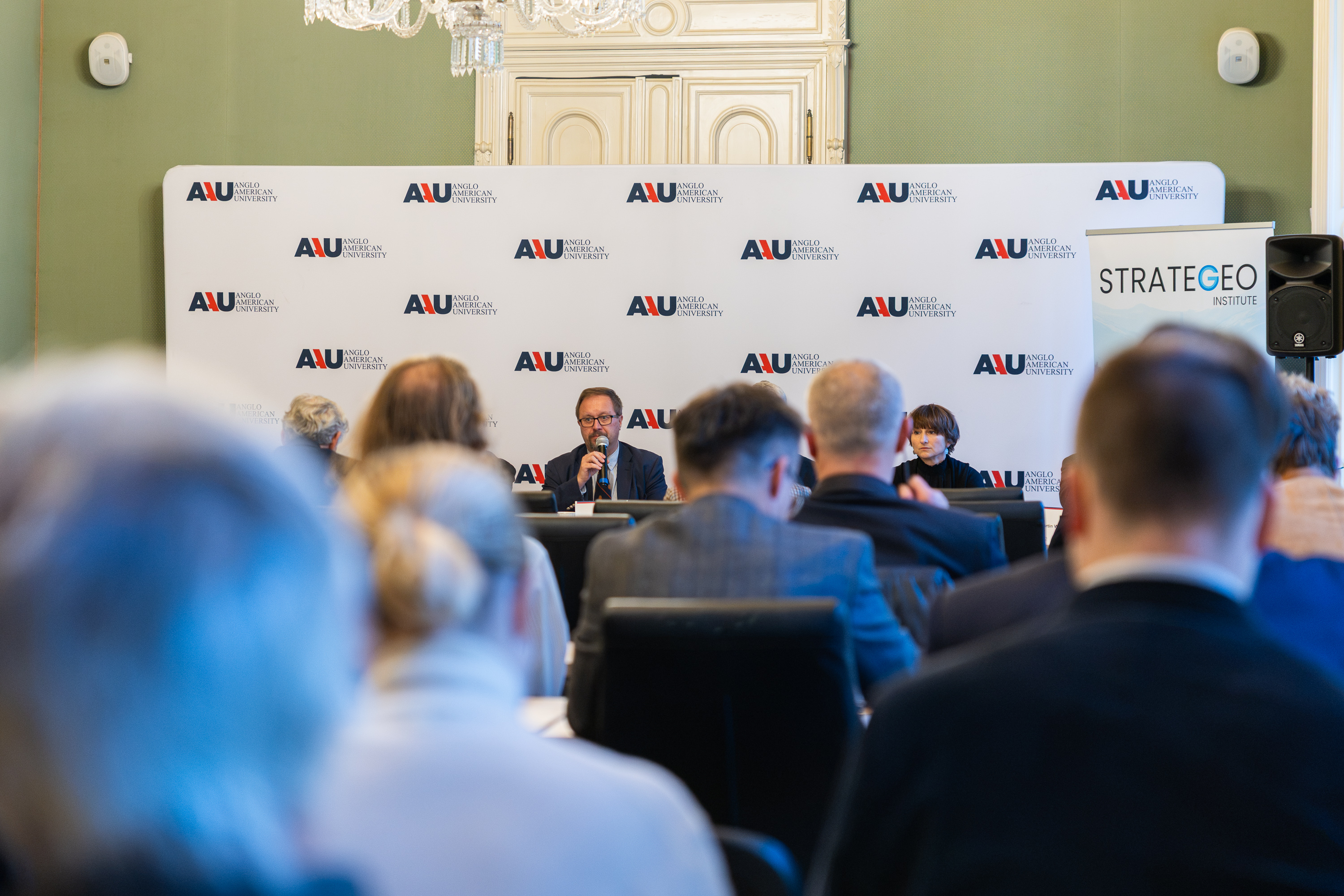
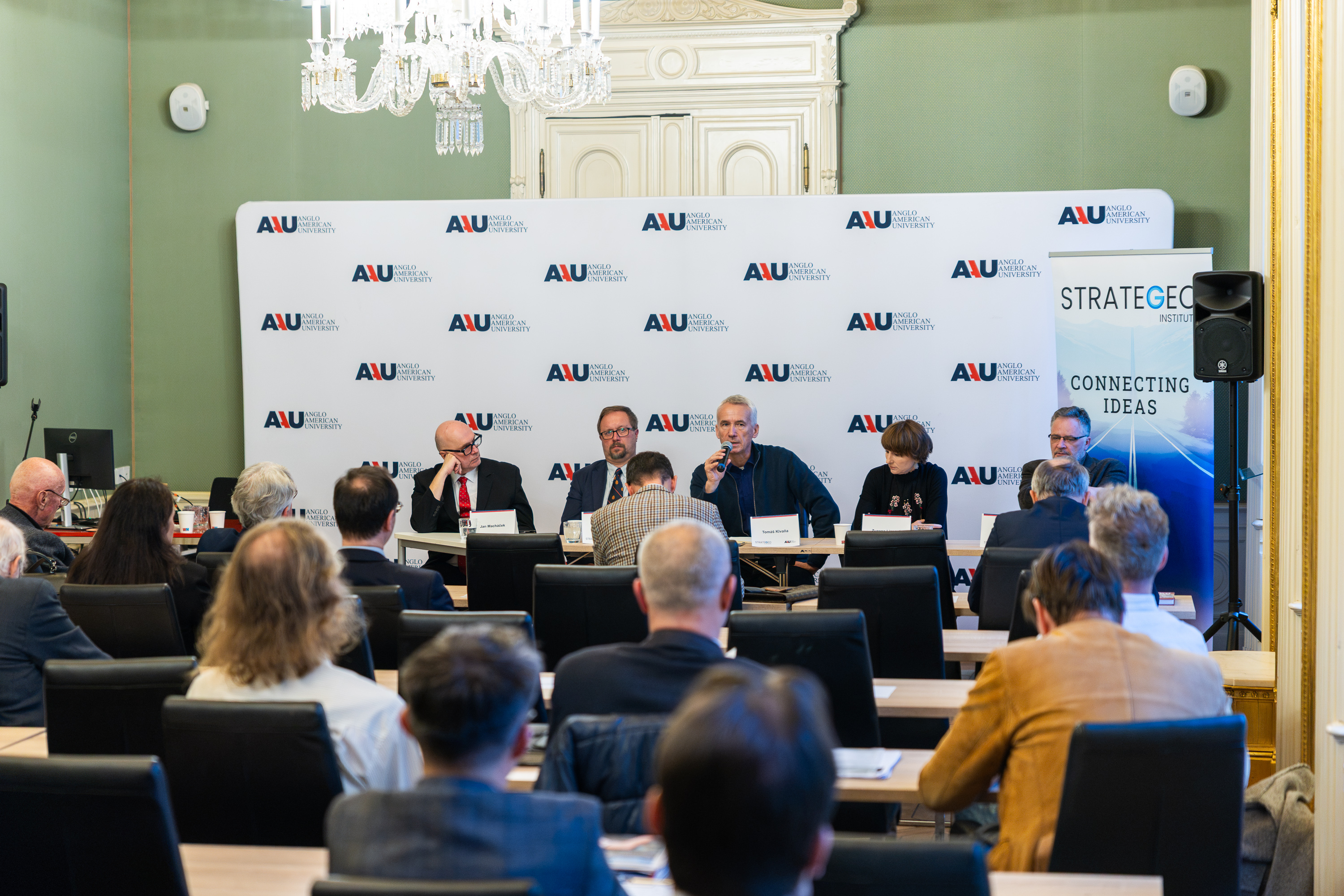
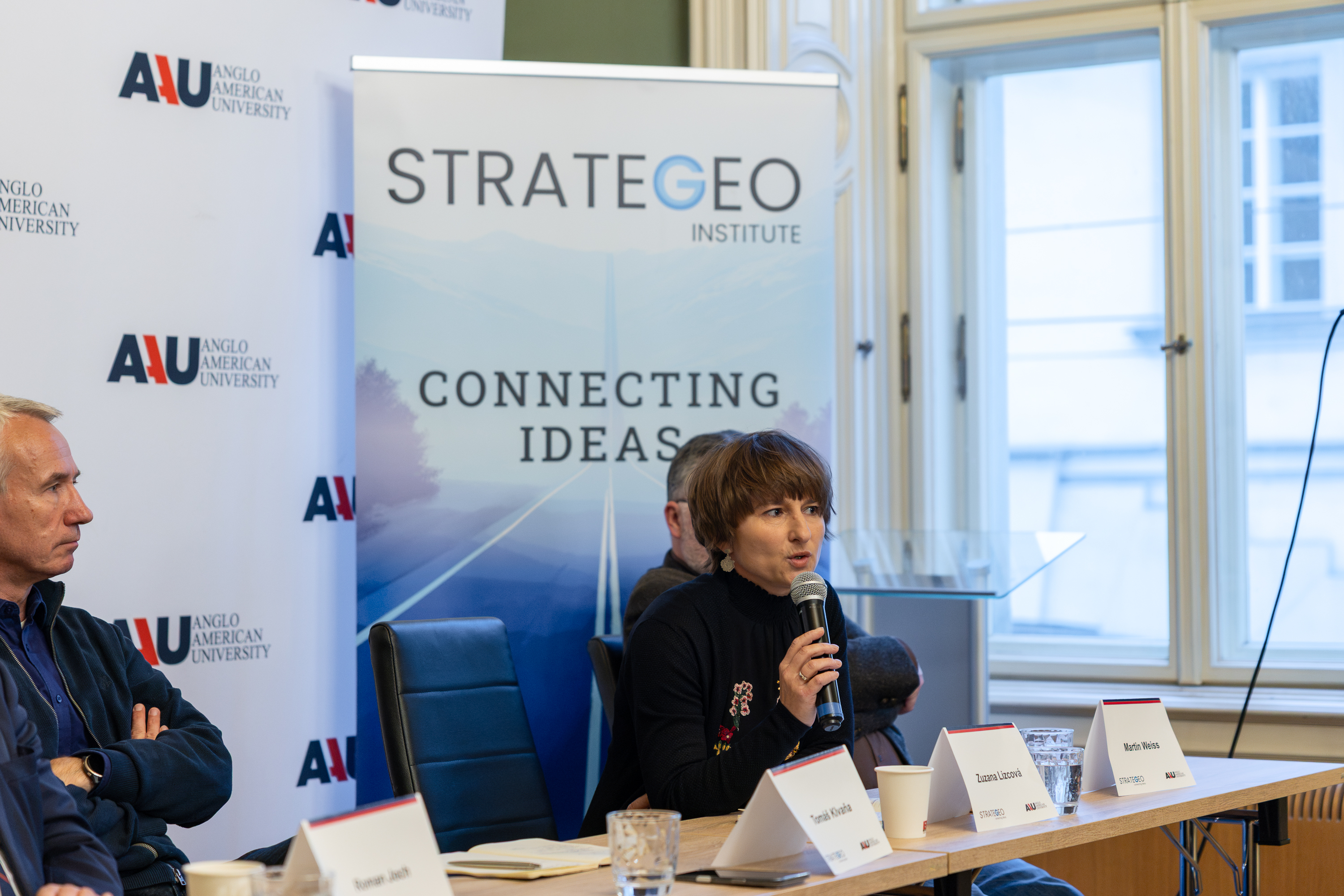
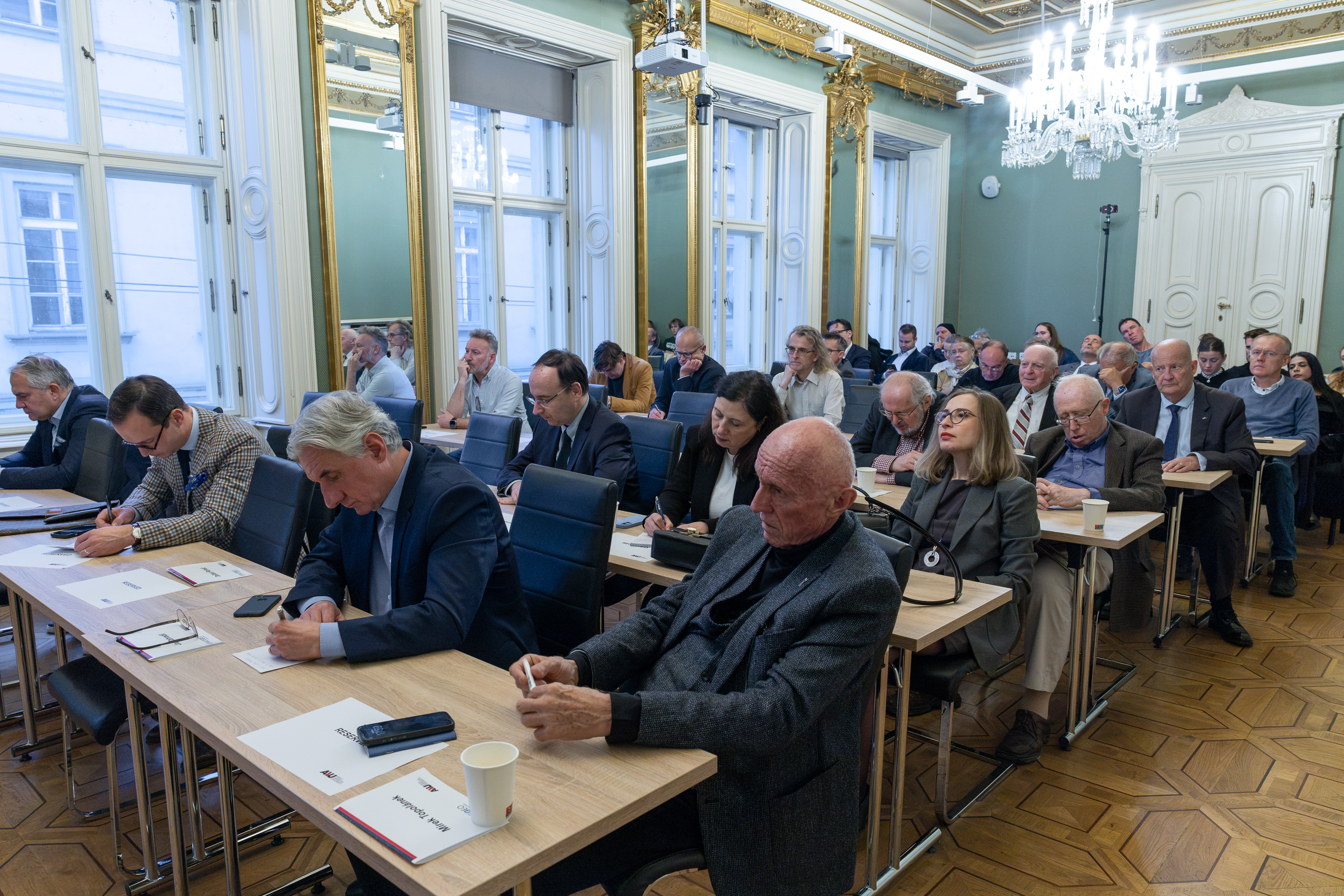
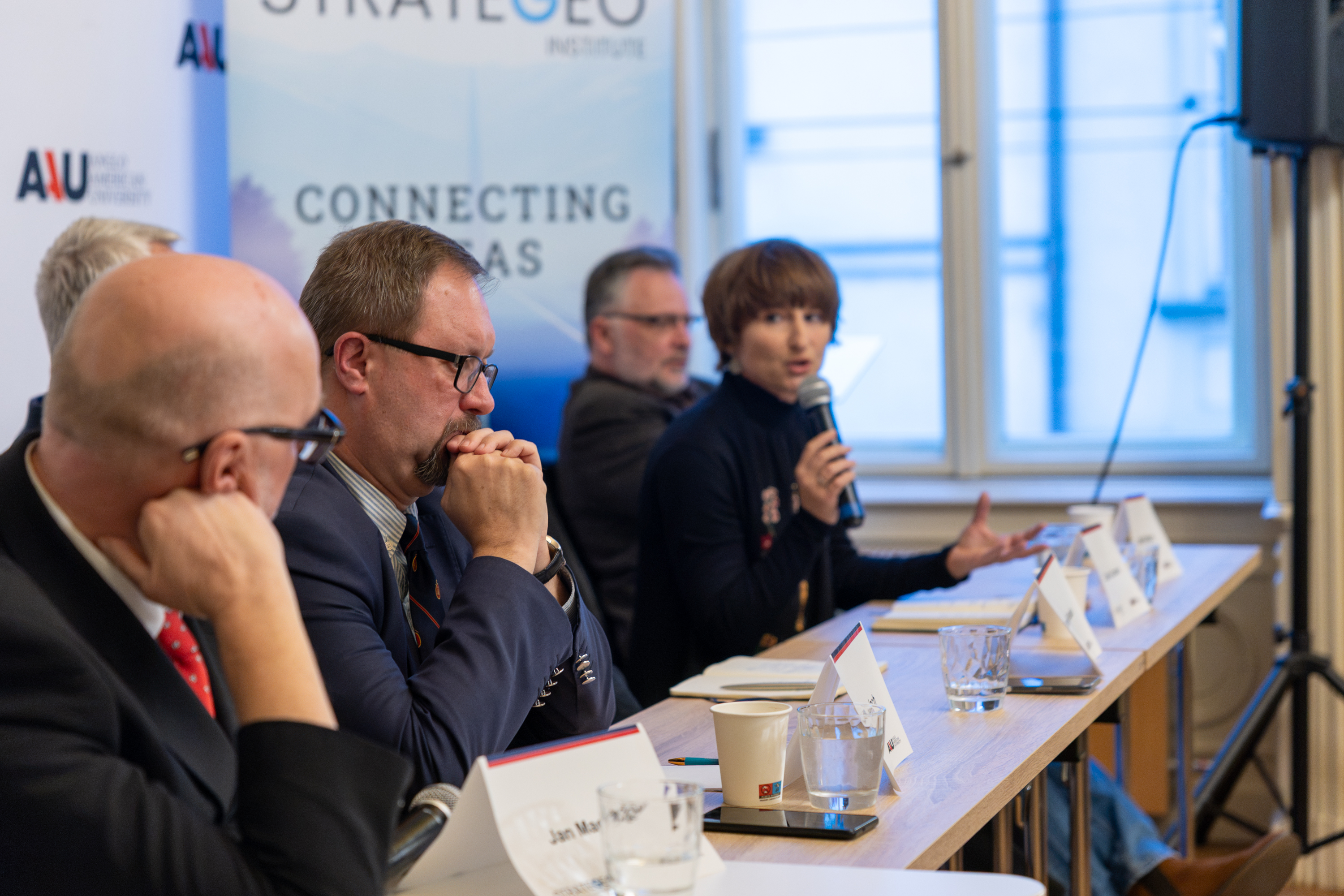
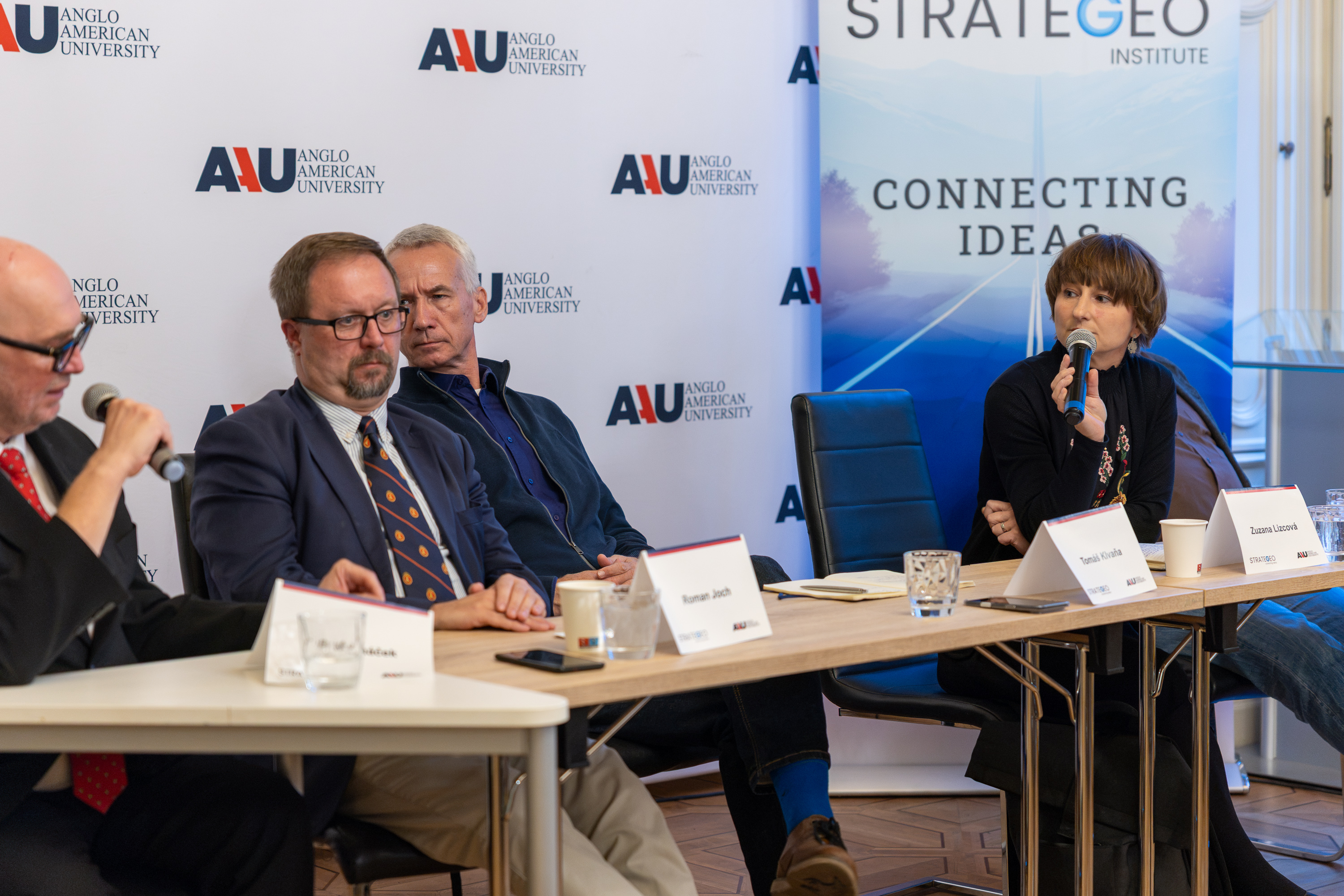
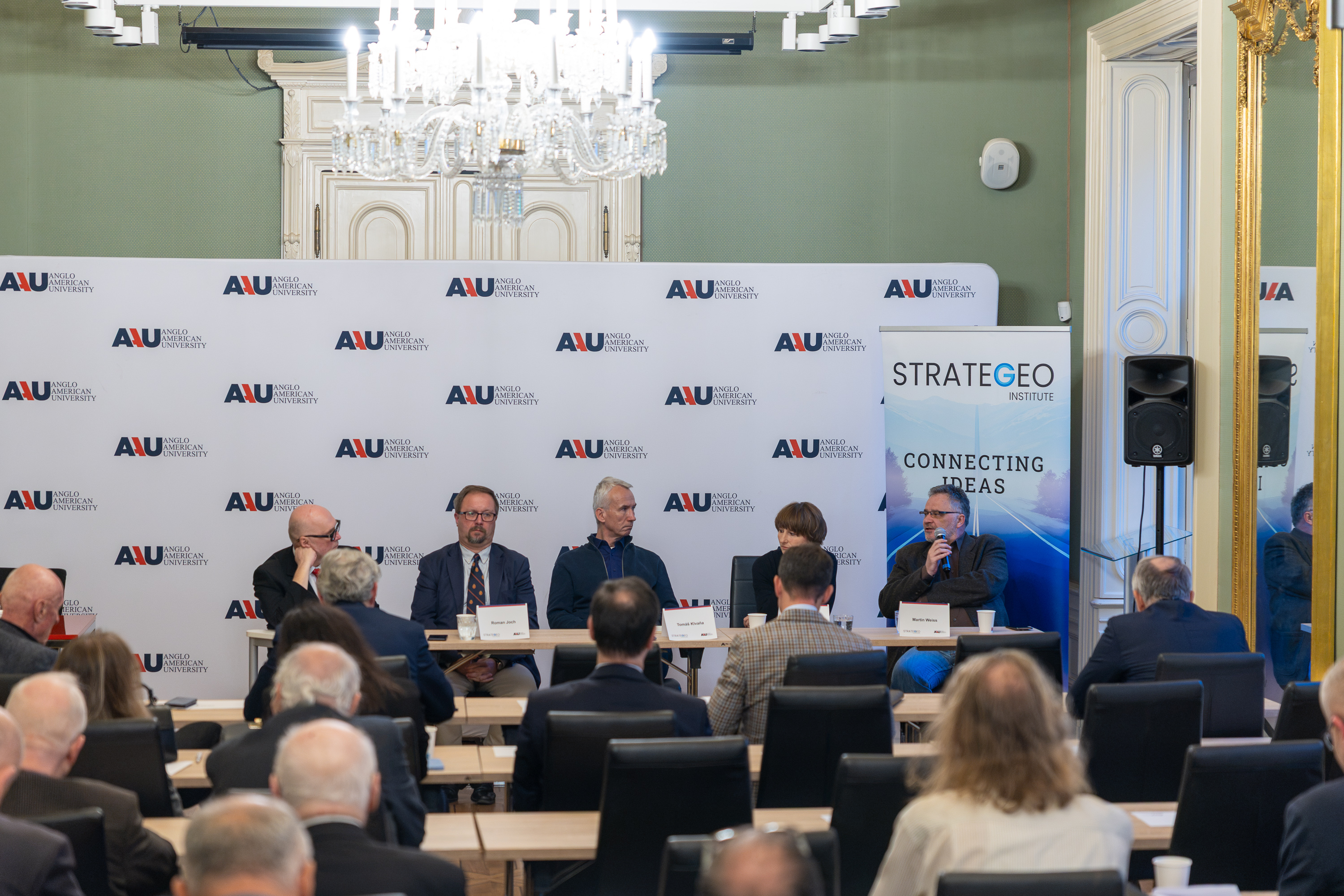
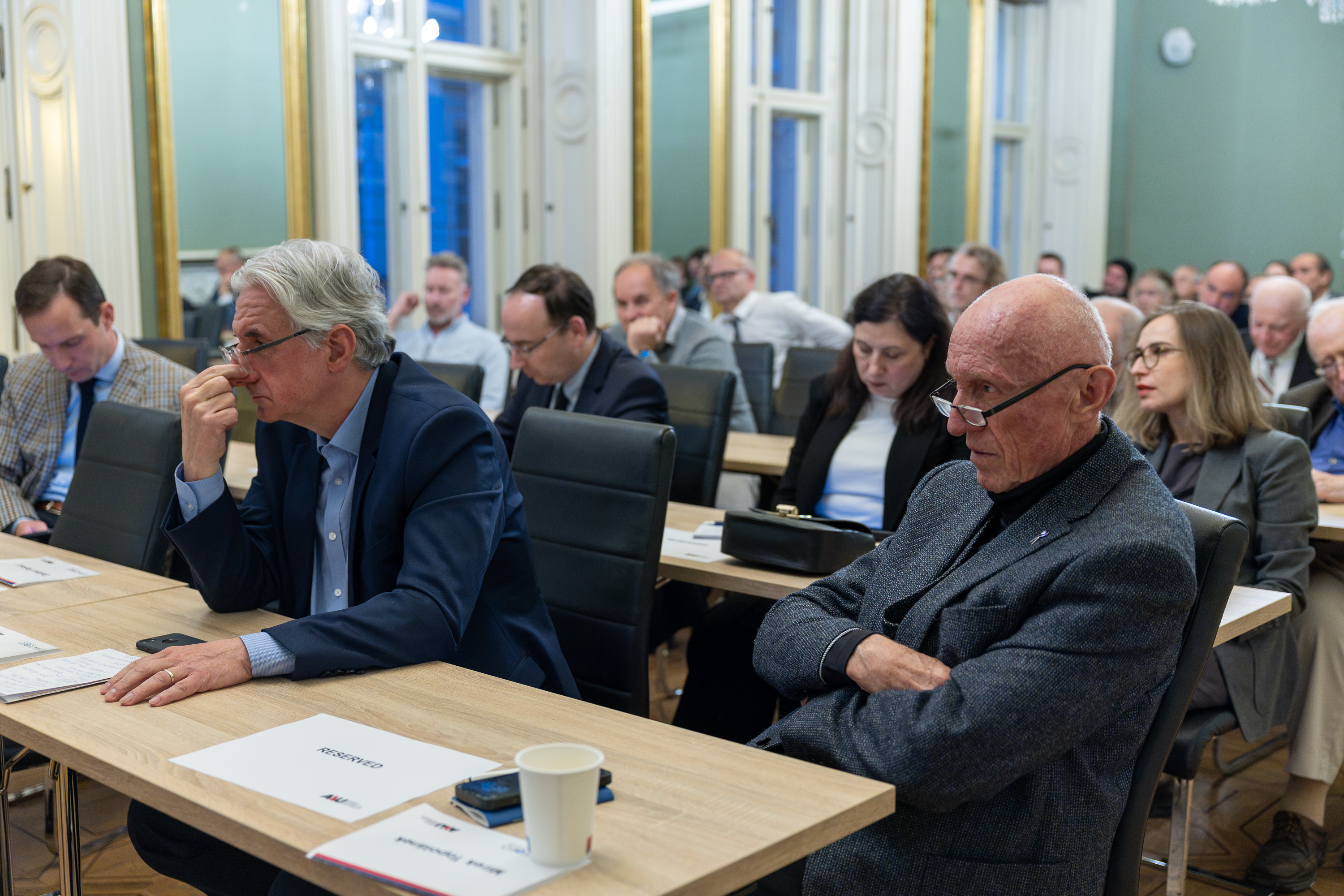
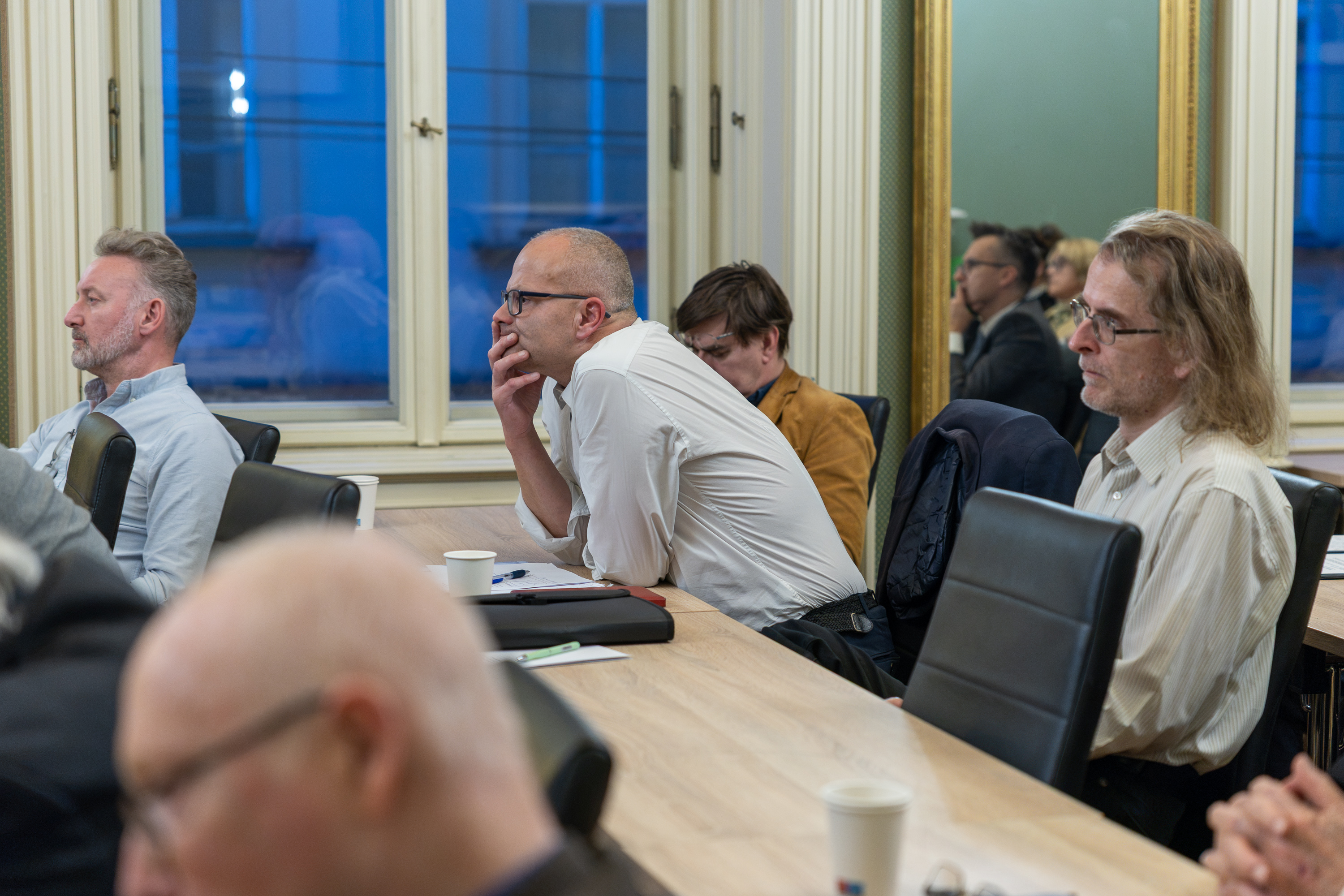
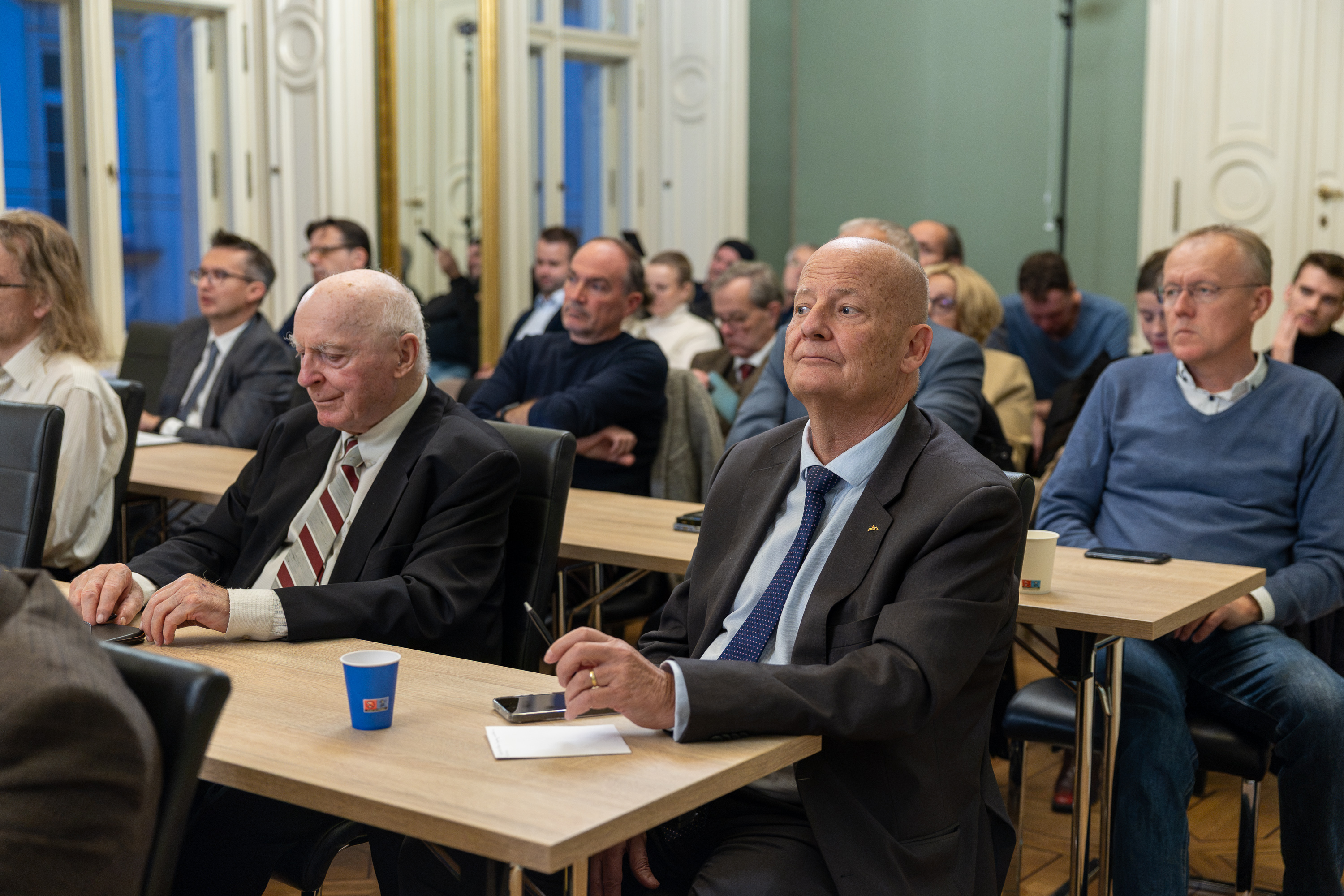
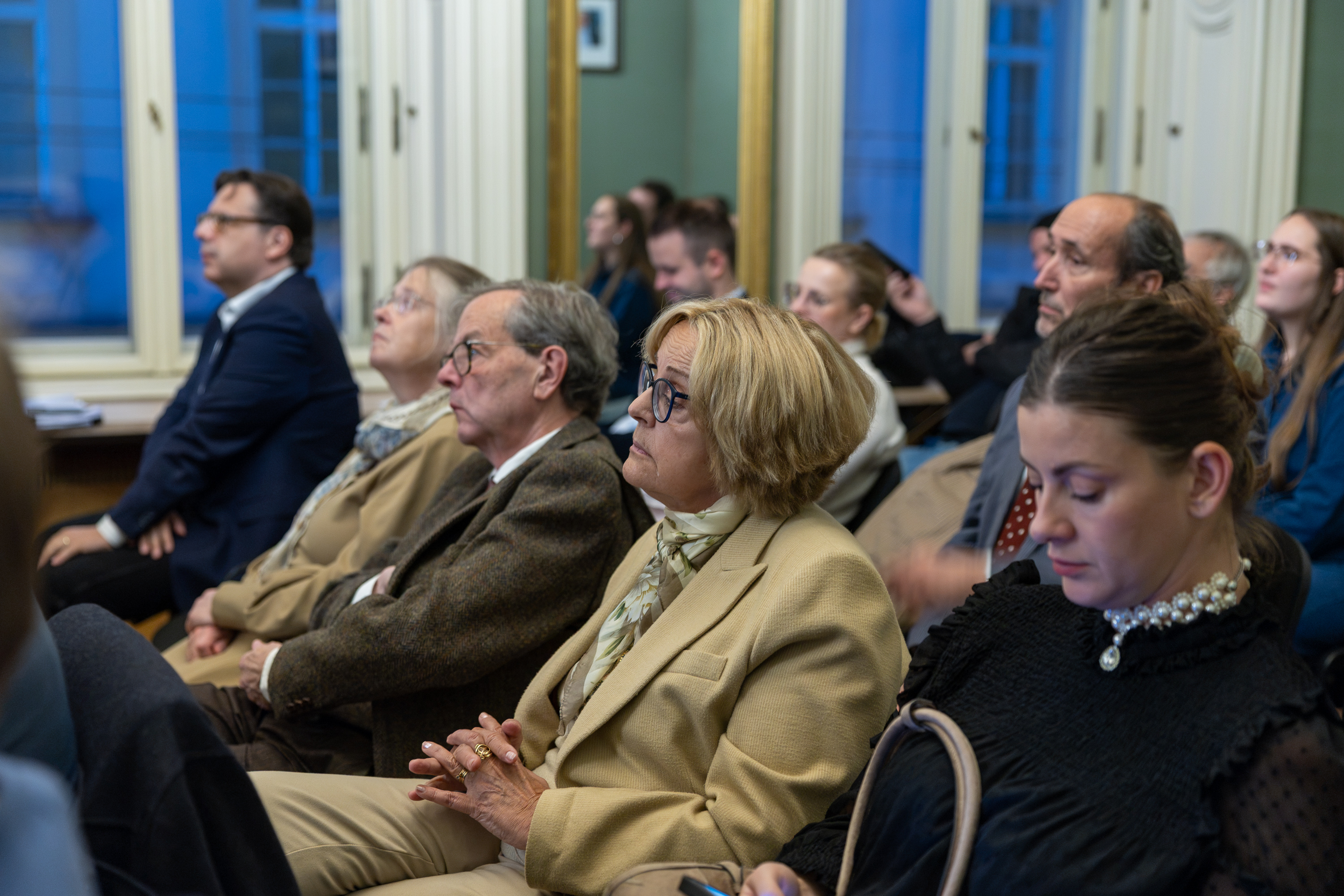
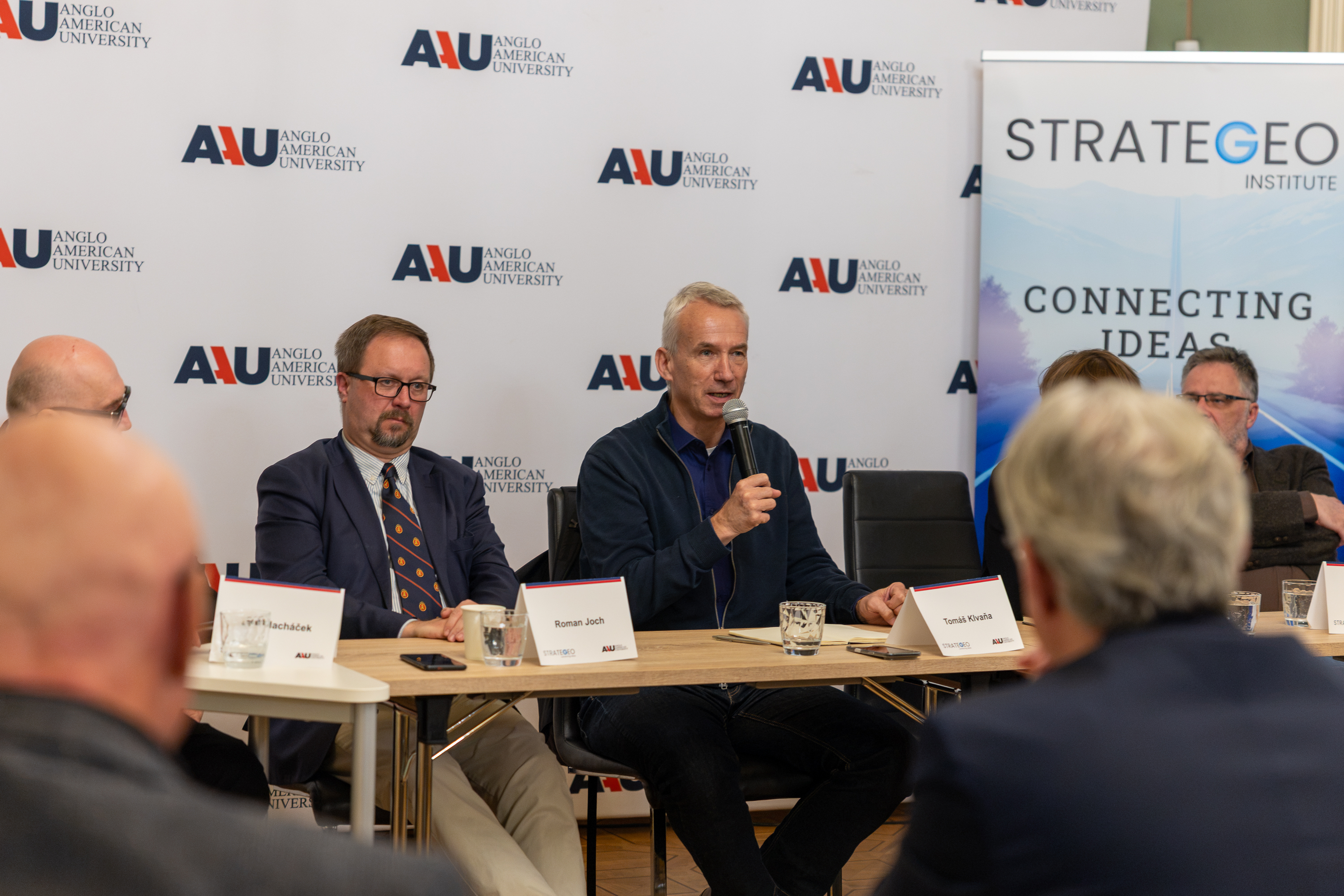
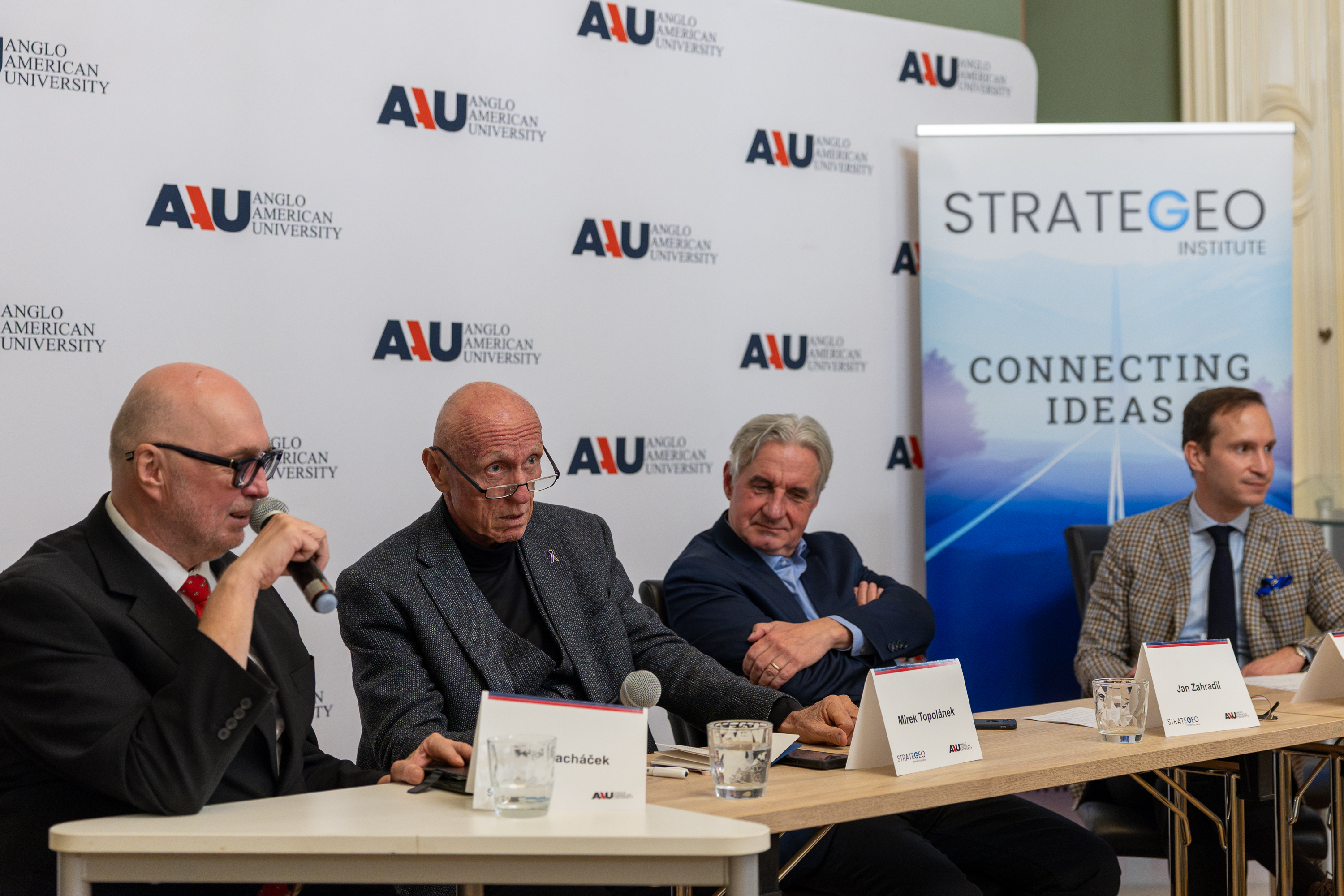
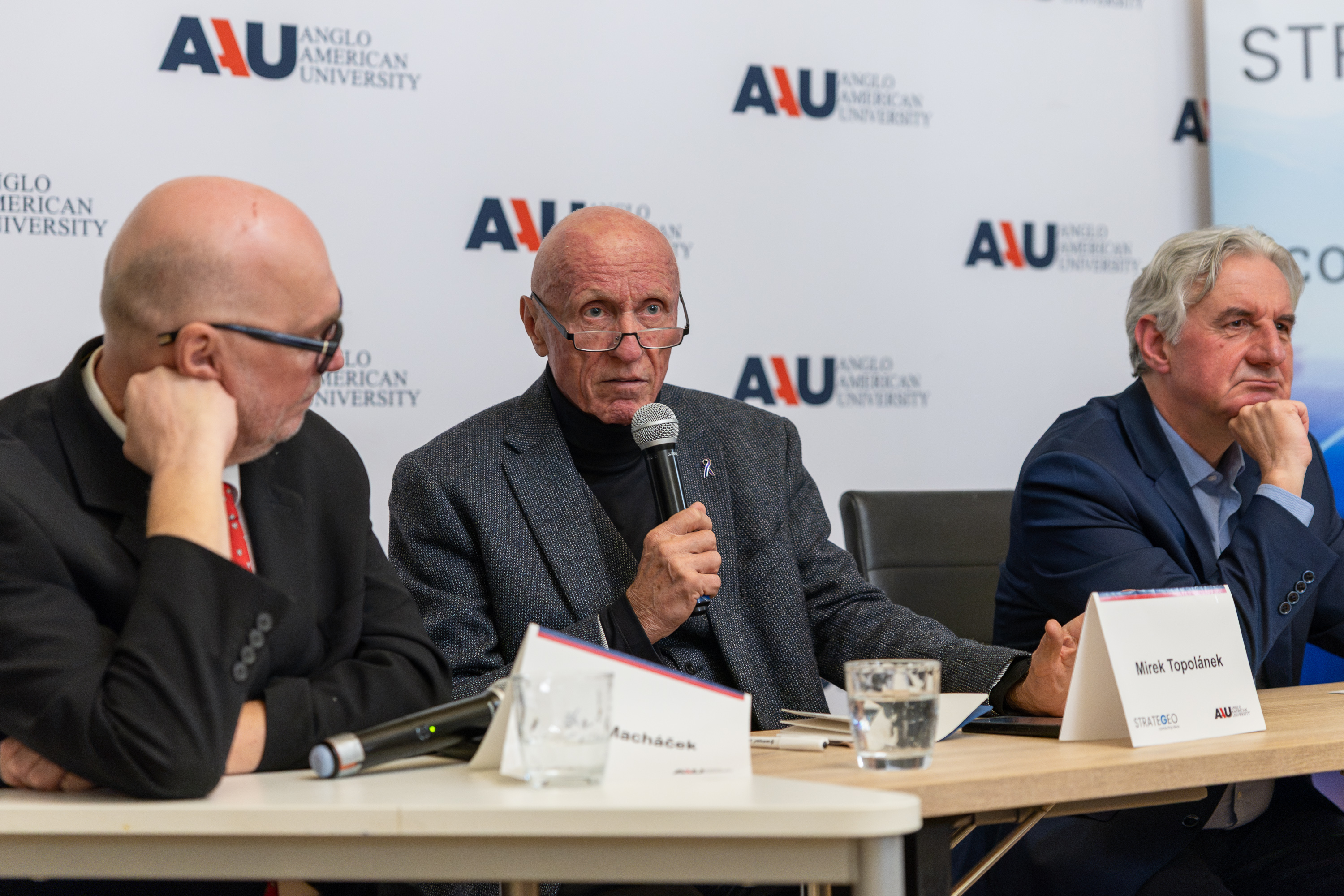
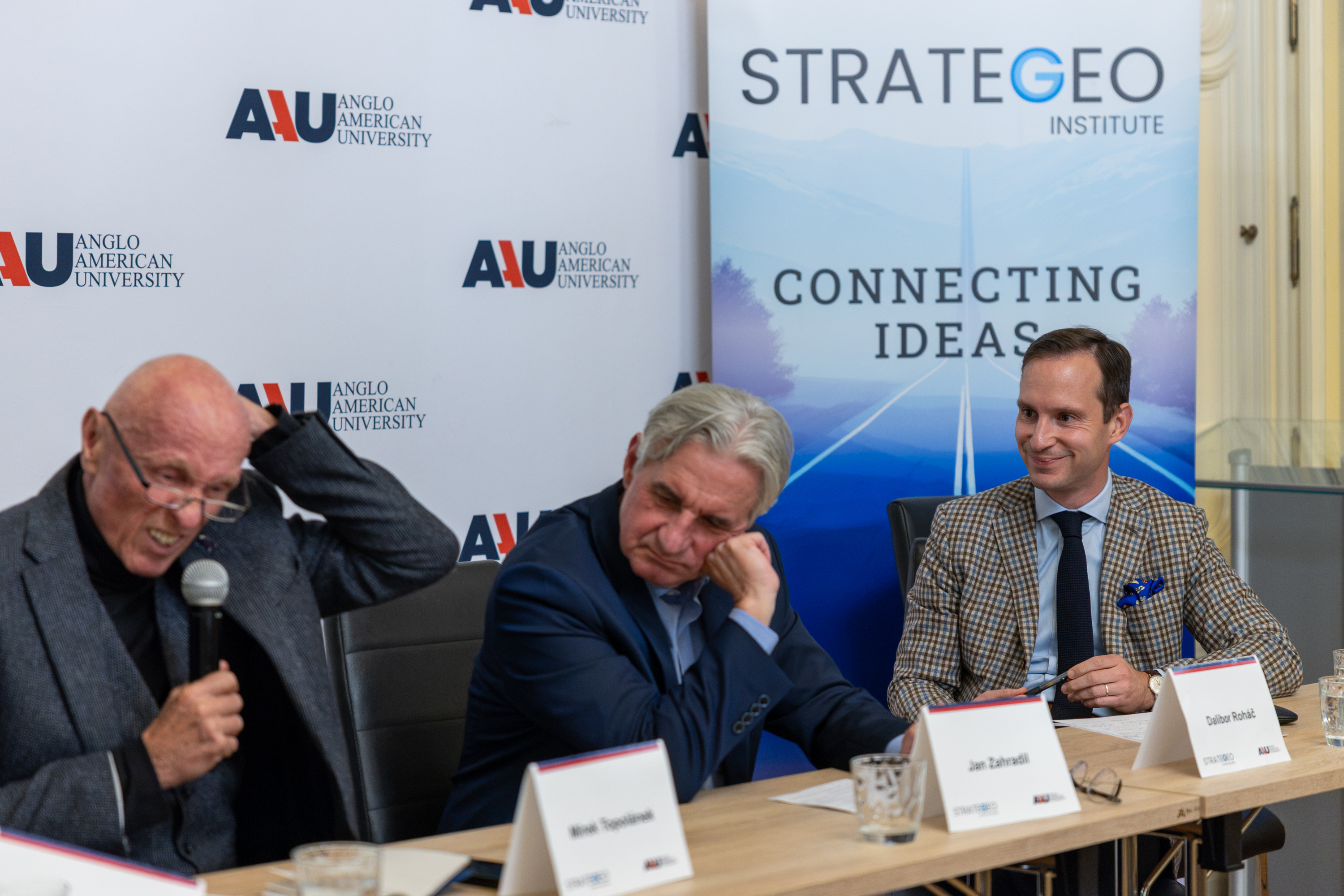
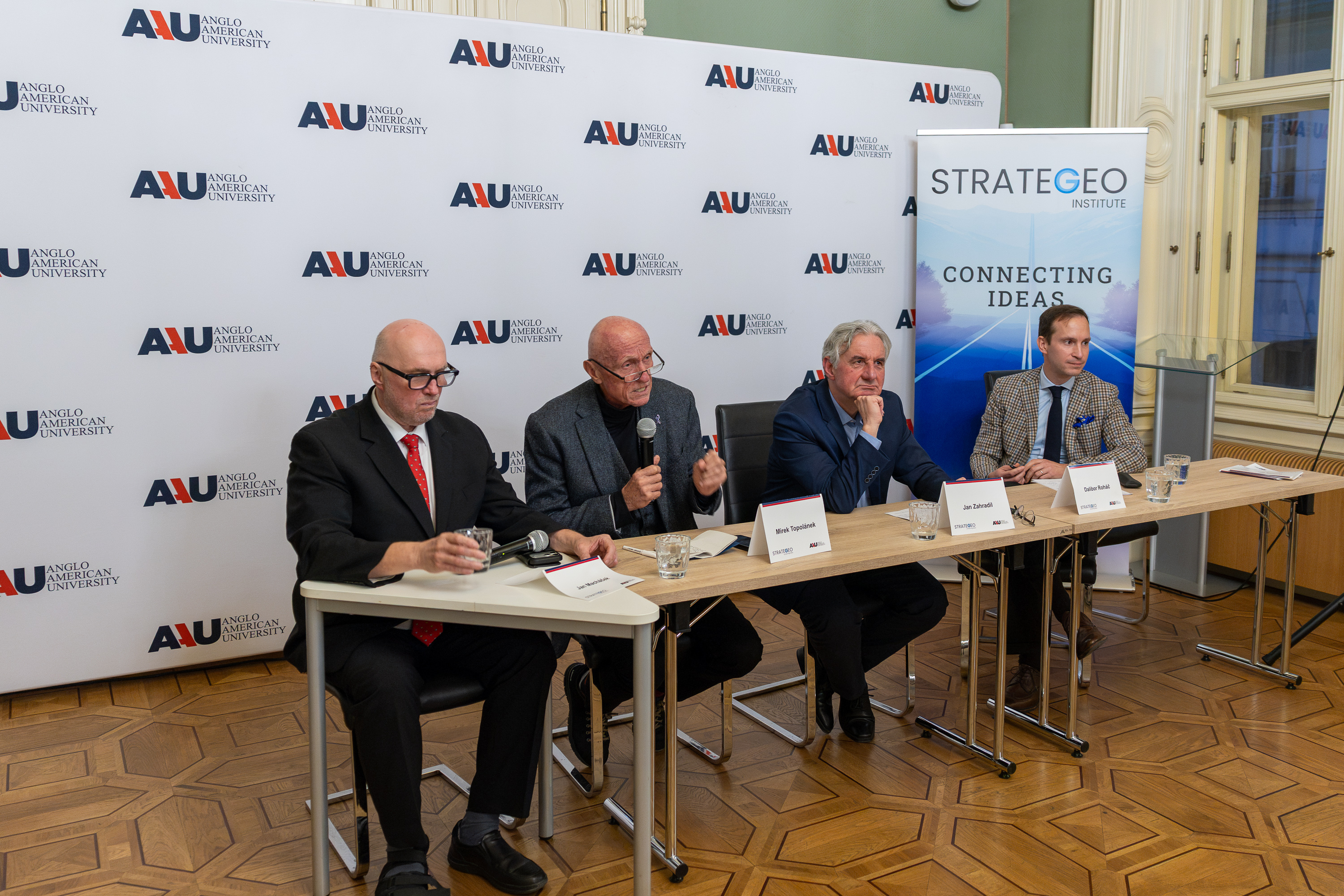
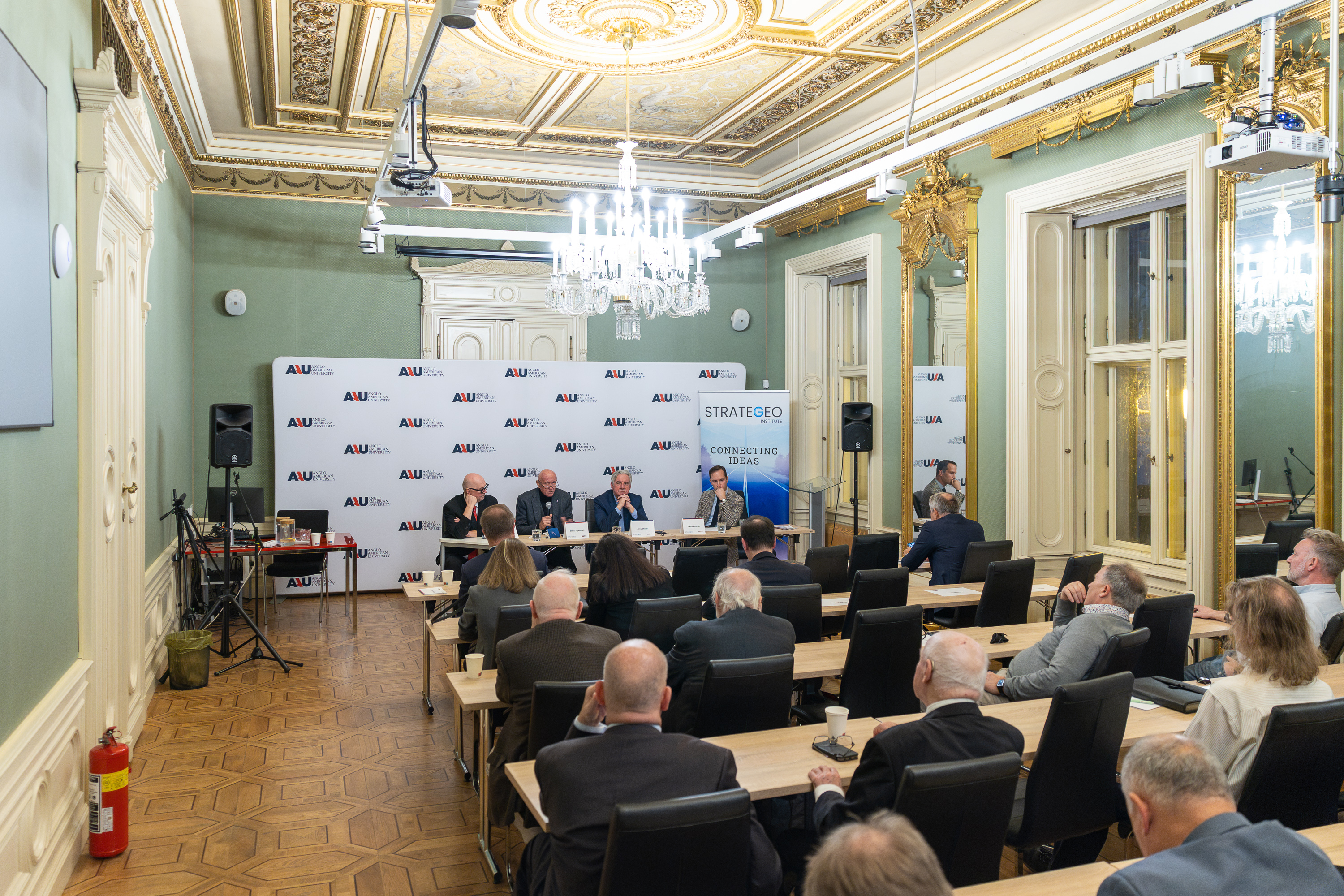
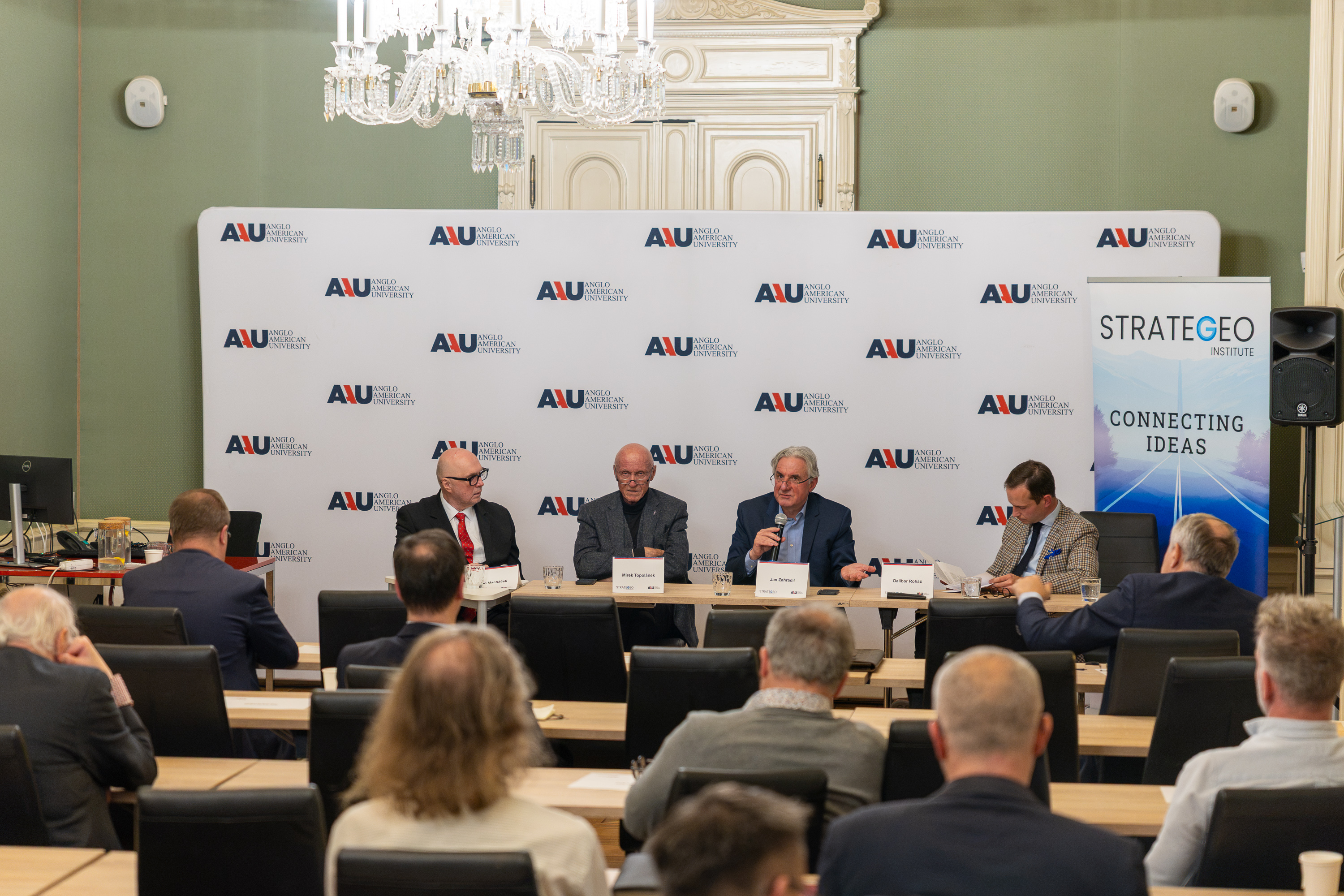
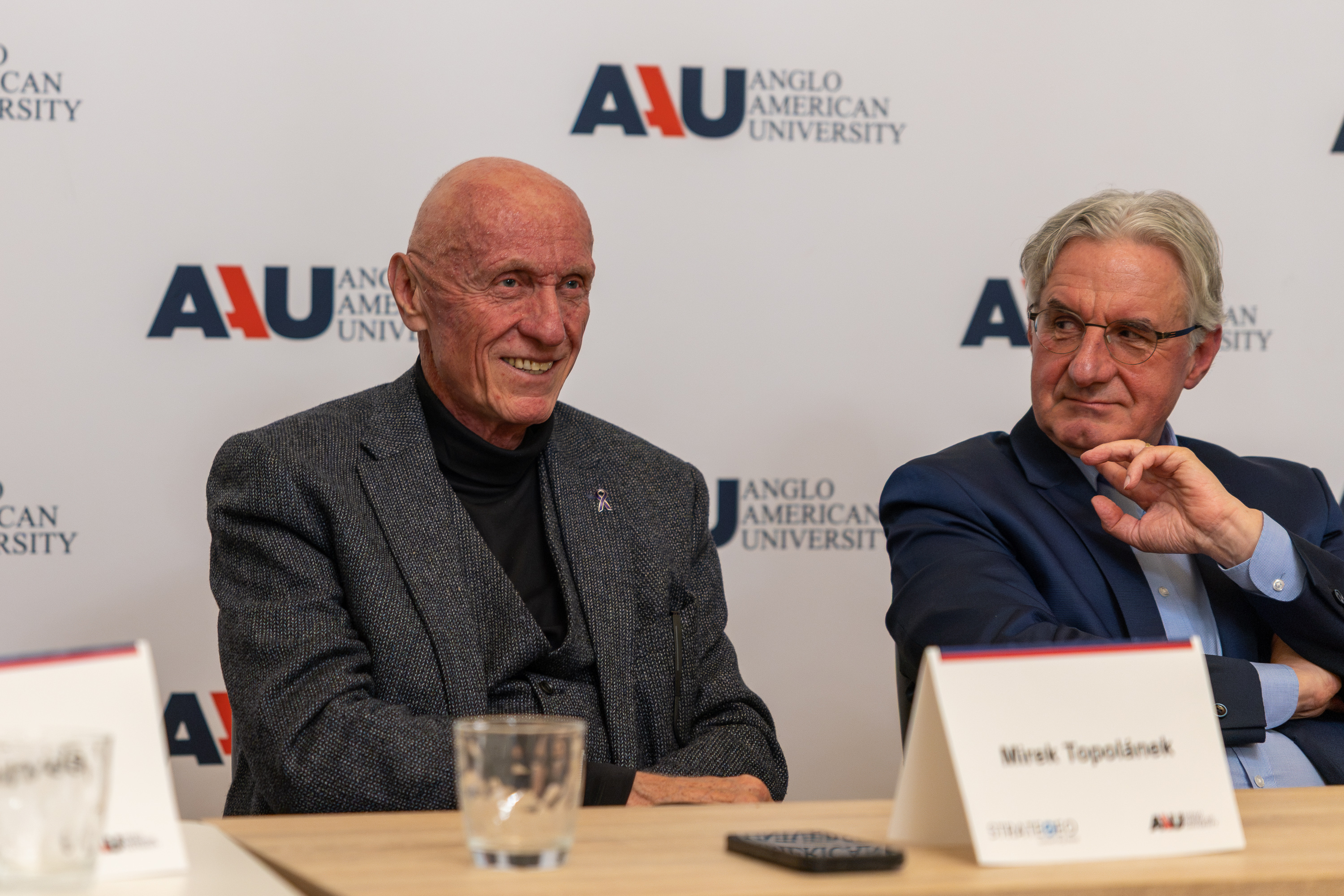
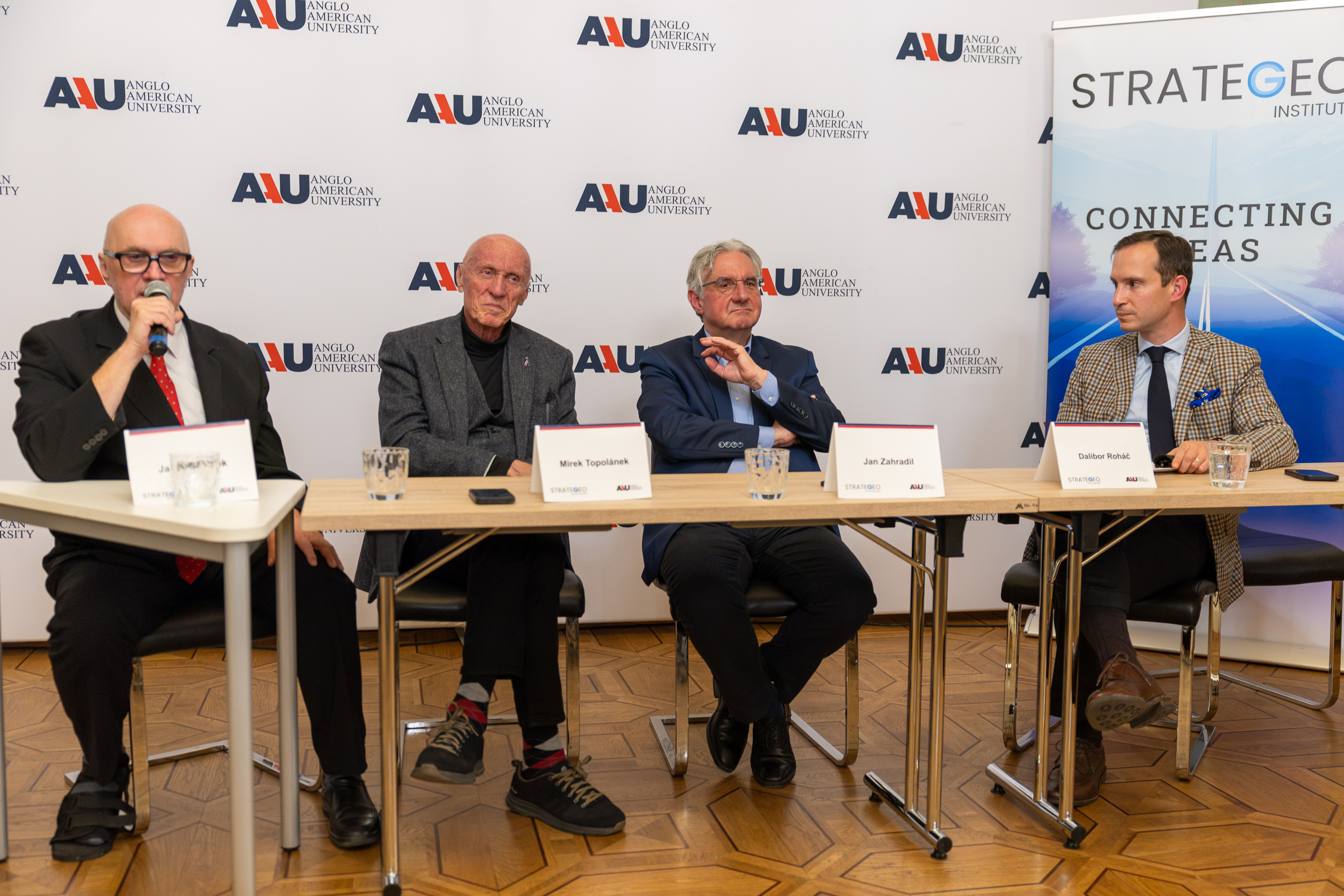
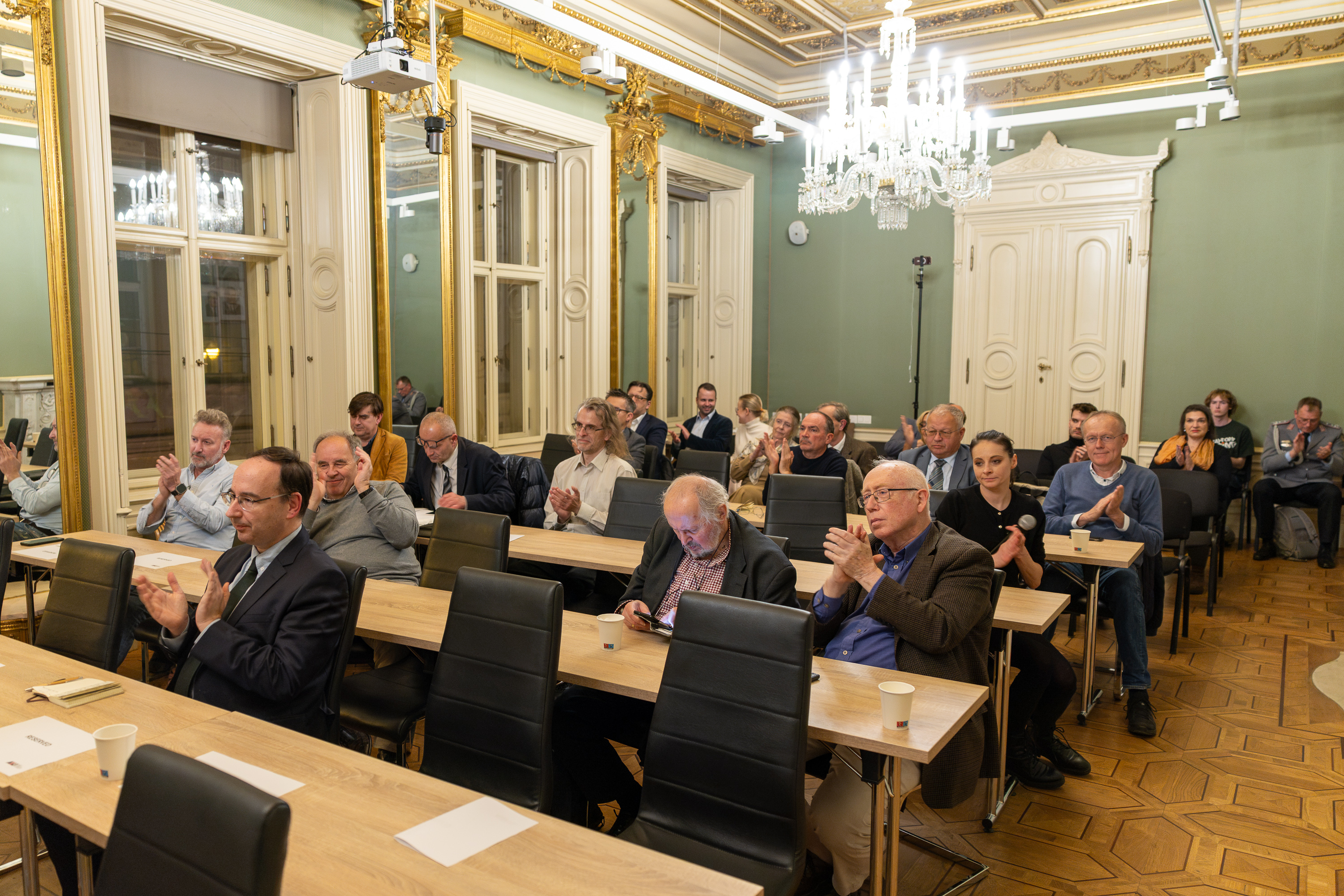
On Tuesday, 20 October 2026, Strategeo Institute, in cooperation with Anglo-American University (AAU), held a public debate at the university’s premises in Prague entitled “Will the Frost Also Come from the West? The Rise of Illiberal Political Movements in Germany, France and the UK”.
The discussion focused on growing support for populist and illiberal political movements in Western Europe, the reasons behind the weakening of traditional political parties, and the potential implications of these developments for the European Union, NATO, and the security and economy of Central Europe.
The debate was moderated by Strategeo Institute President Jan Macháček. In his opening remarks, he noted that while certain Central European countries had until recently been seen as the principal troublemakers within the European Union, major political shifts could now take place in Germany, France and the United Kingdom.
The Causes Behind the Rise of New Political Forces
The first panel examined changes in Western Europe’s political landscape, particularly the weakening of traditional parties and the growing popularity of alternative political movements.
Tomáš Klvaňa identified immigration, ideological shifts among social elites, and fundamental changes in communication brought about by social media as the principal drivers of the current developments. In his view, traditional political parties have failed to respond adequately to these changes, creating space for new political forces.
Roman Joch focused on differences between individual countries. While he does not regard political developments in the United Kingdom as a major threat to Europe, he highlighted the risks associated with the pro-Russian orientation of parts of Alternative for Germany (AfD). He also raised the question of whether involving the party’s more moderate representatives in government might weaken its protest appeal.
Zuzana Lizcová disagreed with this approach, pointing out that participation in government does not necessarily weaken populist parties. She cited Austria’s Freedom Party (FPÖ) as an example. She also stressed that the principal concerns surrounding AfD extend beyond its position on immigration to its relationship with democratic institutions, European integration and Russia.
Martin Weiss described current developments as a gradual collapse of the traditional political centre. In his view, the established party-political model is losing its relevance in Germany, France and the United Kingdom, while voters are increasingly looking for alternatives outside established political structures.
Another important topic was the so-called cordon sanitaire, or the political isolation of radical parties. The participants disagreed on whether this approach helps protect the democratic system or instead contributes to the further strengthening of protest movements.
First-panel speakers:
- Zuzana Lizcová, Head of the Department of German and Austrian Studies, Institute of International Studies, Charles University
- Roman Joch, political scientist, Chairman of the Civic Institute and AAU lecturer
- Tomáš Klvaňa, Executive Director, Aspen Institute Central Europe
- Martin Weiss, political commentator, Echo24 and Týdeník Echo
What Do Political Changes in the West Mean for Central Europe?
The second panel examined the possible consequences of new political forces coming to power in Germany and France for the Czech Republic and other Central European countries. The discussion addressed the future of the EU single market, the eurozone, the Schengen Area, transatlantic relations and European security.
Mirek Topolánek highlighted deeper structural problems in Western European economies and criticised the long-standing reliance on grand coalitions, which he believes has contributed to the weakening of traditional political parties. Regarding the Czech Republic, he emphasised the need to reduce energy dependence, modernise industry and limit the country’s one-sided economic dependence on Germany.
Jan Zahradil placed changes in European politics within a broader geopolitical context. In his view, Western countries are gradually losing their former dominant position in the world, and the rise of new political parties is one manifestation of that shift. Central Europe should therefore prepare for a possible increase in protectionism, changes in relations with Russia and a weakening of established transatlantic ties.
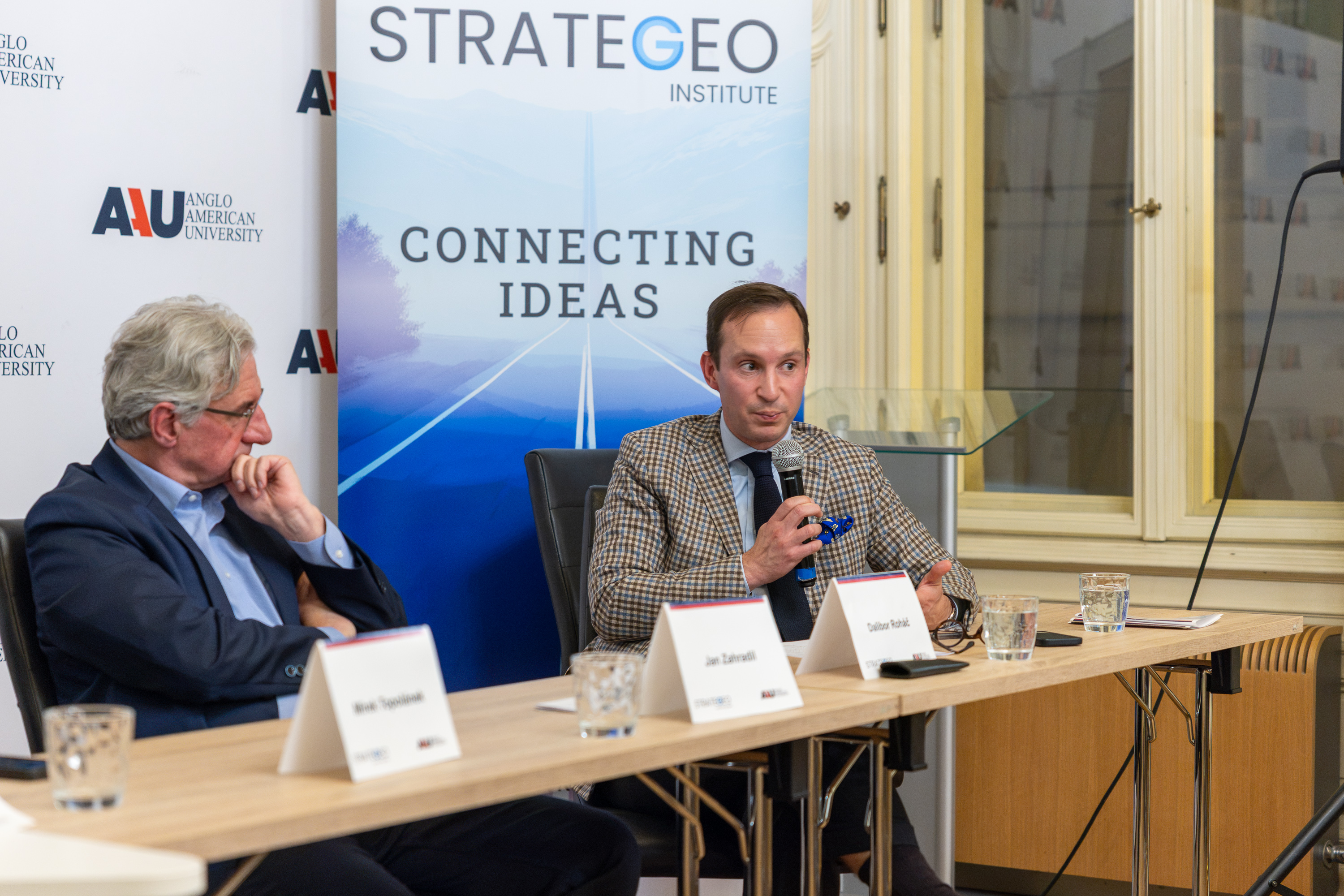
Dalibor Roháč stressed the importance of democratic institutions and the need to distinguish between legitimate political positions and genuine threats to liberal democracy. He also noted that Central European countries no longer share strategic goals as clearly defined as those they pursued when joining the European Union and NATO. In a changing international environment, they will therefore need to explore new forms of cooperation and develop more flexible partnerships based on specific interests.
Second-panel speakers:
- Mirek Topolánek, Prime Minister of the Czech Republic, 2006–2009
- Jan Zahradil, Founder of CAPS at CEVRO University; Member of the European Parliament, 2004–2024
- Dalibor Roháč, Director of Research, GLOBSEC
Both panels were moderated by Jan Macháček, President of Strategeo Institute.
Europe’s Future in a Changing Political Landscape
The debate demonstrated that growing support for illiberal and populist movements is not an isolated phenomenon, but part of a broader transformation of European politics. The speakers offered differing perspectives on the causes of these developments and on whether bringing new political forces into government could moderate their positions or instead pose risks to democratic institutions.
Another key issue is the Czech Republic’s readiness for potential changes in the political direction of its most important European partners.
The Strategeo Institute public debate thus provided a forum for an open exchange of views on the future of European integration, security and economic cooperation at a time when Western Europe’s established political order is coming under increasing pressure.